Featured

When the Glass Breaks

When the glass breaks / we are all just people behind the screens.

— Emma Yahr.
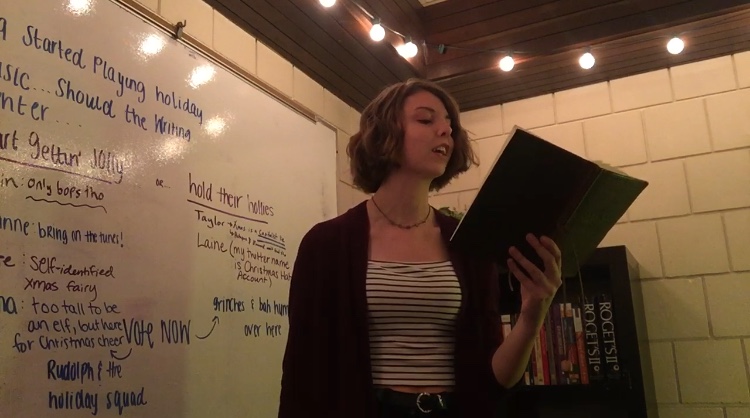
https://youtu.be/eH6zux9eFWU

When the Glass Breaks 
after Blythe Baird, Sonya Renee Taylor and Jonathan Salazar
 
Snapchat only hits you up after 10pm
is keg stands and gray joggers
a photo from the forehead up
or crotch down
Snapchat just isn’t the relationship type.
 
Twitter posts #SaveTheTurtles
while pushing a plastic straw
into their iced oat milk latte
is Whole Foods and thrifted clothing
political advocacy whenever its
convenient to their analytics
Twitter thought it was cool first.
 
Facebook has a different photo album
dedicated to every country they’ve been to
is all take me back and selfies with the Eiffel Tower
is authentic cuisine and enchanté
Facebook has a 20 minute backstory
for every article of clothing they own.

Instagram woke up like this
is perfect angles and carefully curated content
a snapshot of avocado toast in the morning
and a charcoal facemask at night
Instagram is champagne laughter
is rose-tinted glasses
is dopamine high.  
 
But Snapchat also cries
wants a connection to last
longer than 10 seconds
instead of it disappearing
into cyberspace.
 
Twitter is insecure
uses self-deprecation to self-destruct
longing for someone to reach out
and ask if they’re okay
longing for a space to be themselves
and not have to apologize for it.
 
Facebook has Generalized Anxiety Disorder
has to psych themselves up before leaving the house
let alone traveling abroad
they just want to be known
to feel like they matter
in a world so big.
 
Instagram puts lipstick on for breakfast
is a straight A student in math because of
all the calorie counting
panics every time they post because
what if the caption isn’t good enough?
what if they’re not good enough?
 
When the glass breaks
we are all just people behind the screens 
both puppet and puppeteer
a tangled mess of strings and limbs
of choreographed identity.

We are all struggling to untether the binds.

The Inspiration Behind “When the Glass Breaks”

Blythe Baird “When the Fat Girl Gets Skinny” via Button Poetry https://www.youtube.com/watch?v=16Tb_bZZDv0

Sonya Renee Taylor “The Body Is Not an Apology” via Button Poetry https://www.youtube.com/watch?v=iXLSKHzOLkA&t=15s

Johnathan Salazar “Social Media” via Button Poetry https://www.youtube.com/watch?v=5Rvs_nh7zRI&t=30s

Statement of Intent

No matter your wreckage / there will be someone to find you beautiful / despite the cruddy metal / your ruin is not to be hidden behind paint and canvas / let them see the cracks / someone will come to sing into these empty spaces” Sarah Kay

It is my intent to show the expansive nature of spoken word poetry through my original piece, When the Glass Breaks, inspired heavily by poets, Blythe Baird, Sonya Renee Taylor, and Jonathan Salazar. Oftentimes, the discourse created through spoken word extends beyond the original theme laid out in a poem, creating a richer dialogue about the interconnection of our basic human emotions. Modern spoken word poetry pays homage to the oral traditions of the past by engaging audiences in discussions about a myriad of polarizing subjects both in performance and in the comment sections of recorded spoken word pieces. Poets grapple with issues of racial and gender inequality, sexual assault, growth, healing, heartbreak and the complexity of body image and eating disorders on a global level (a discourse that would not have been possible at the dawn of oration). Today, poets use spoken word as a platform to advocate for these various social, political and personal movements, creating a discourse among millions of people due to the hyper connected nature of social media.

When the Glass Breaks grapples with the construction of personal identity online, arguing that social media and social media usage are far more layered than what meets the eye. The personified apps Snapchat (the fuckboy), Twitter (the attention-seeking hipster), Facebook (the kid that studied abroad) and Instagram (the queen bee), are presented as typical college student stereotypes to further the discourse that social media apps (much like people) are dynamic, interacting with and experiencing all of the positive and negative facets of life. We are both puppet and puppeteer as we construct the image of ourselves online, and the advantage of using spoken word to foster these conversations is that it makes serious topics like this much more accessible and entertaining to the average person.

Design a site like this with WordPress.com
Get started